On 6 November 2026, the PubDiplo Colloquium was held at Hong Kong Baptist University (HKBU), bringing together five scholars from the PubDiplo Hong Kong team. Under the theme “National Culture, Technology, and China’s Public Diplomacy: Emerging Trends and Critical Issues,” the event explored the roles of trust, communication strategies, cultural intermediaries, digital platforms and soft power in contemporary public diplomacy.
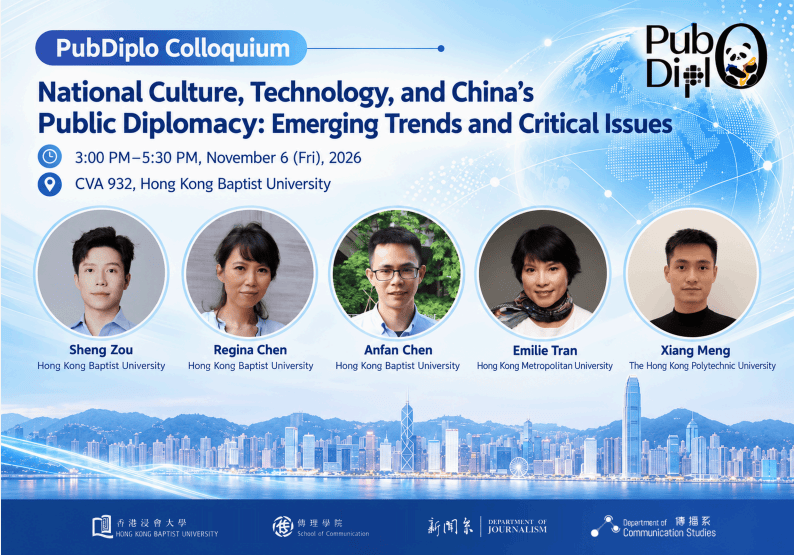
Professor Sheng Zou from the Department of Journalism at Hong Kong Baptist University, Hong Kong PI of the PubDiplo Project, moderated the colloquium. Faculty members and students from the university also attended the event.
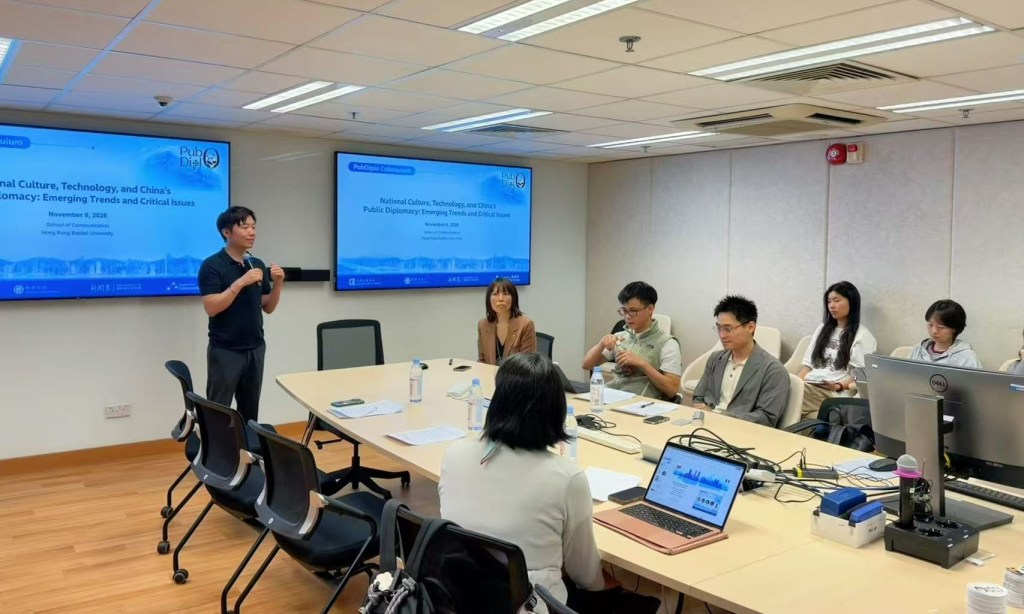
Participants at the PubDiplo Colloquium at Hong Kong Baptist University
Professor Yi-Ru Regina Chen, Head of HKBU’s Department of Communication Studies, addressed public trust as a critical issue in public diplomacy. Drawing on research in organisational relationships and strategic communication, she considered how governance, institutional conduct and communication contribute to trust in the AI era. She also discussed the growing role of external AI agents in mediating relations between organisations and their publics.
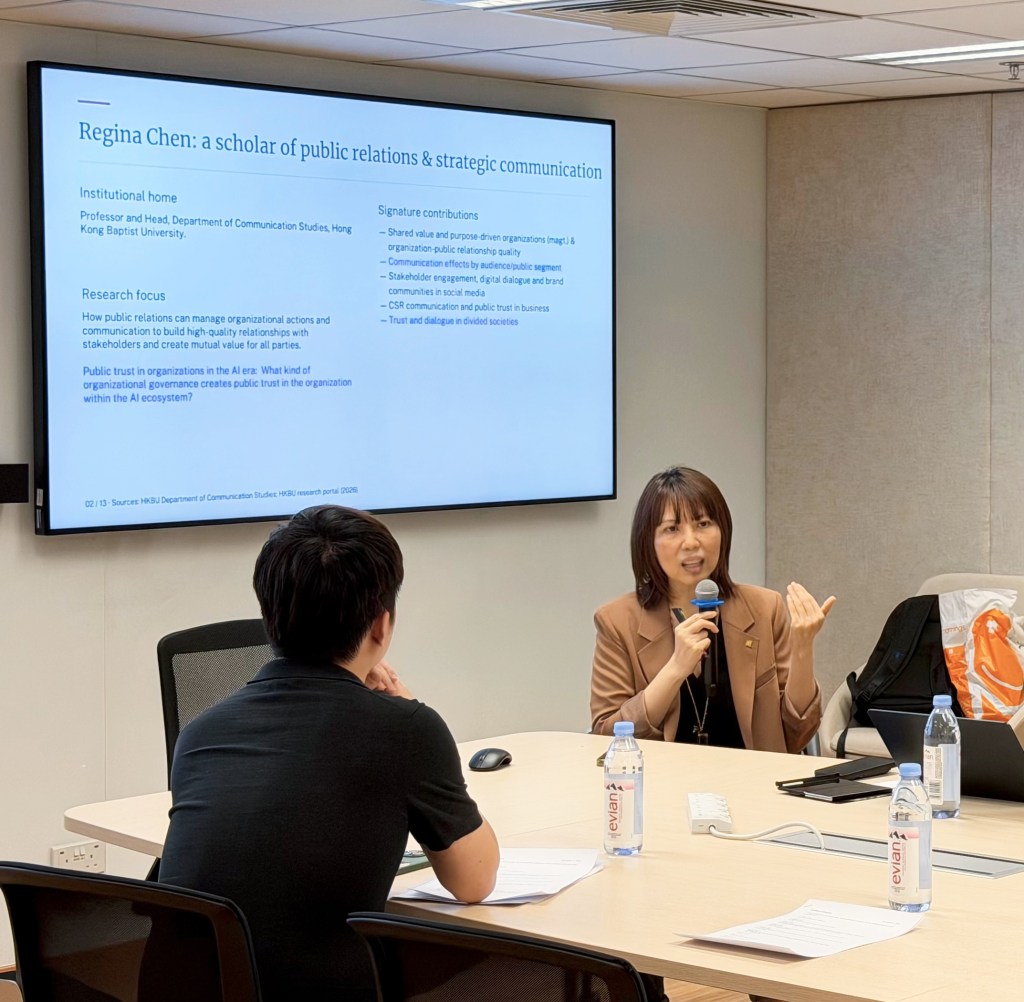
Professor Yi-Ru Regina Chen discusses public trust in the AI era
Professor Anfan Chen from the Department of Communication Studies presented research on the ways academic article titles attract attention. Analysing more than 2.3 million research articles, he examined promotional, rhetorical, emotional and conversational titling tactics and their differing associations with scholarly citations and public attention. The findings had broader implications for how communication strategies work across academic and public arenas.
Professor Anfan Chen discusses attention strategies in academic communication
Professor Emilie Tran of Hong Kong Metropolitan University explored public diplomacy between France and Hong Kong through cultural exchange, diaspora networks and digital participation. She examined how institutions and intermediaries shape international representations, asking who gains recognition as a legitimate voice and how digital communication may redistribute the authority to represent places and cultures.
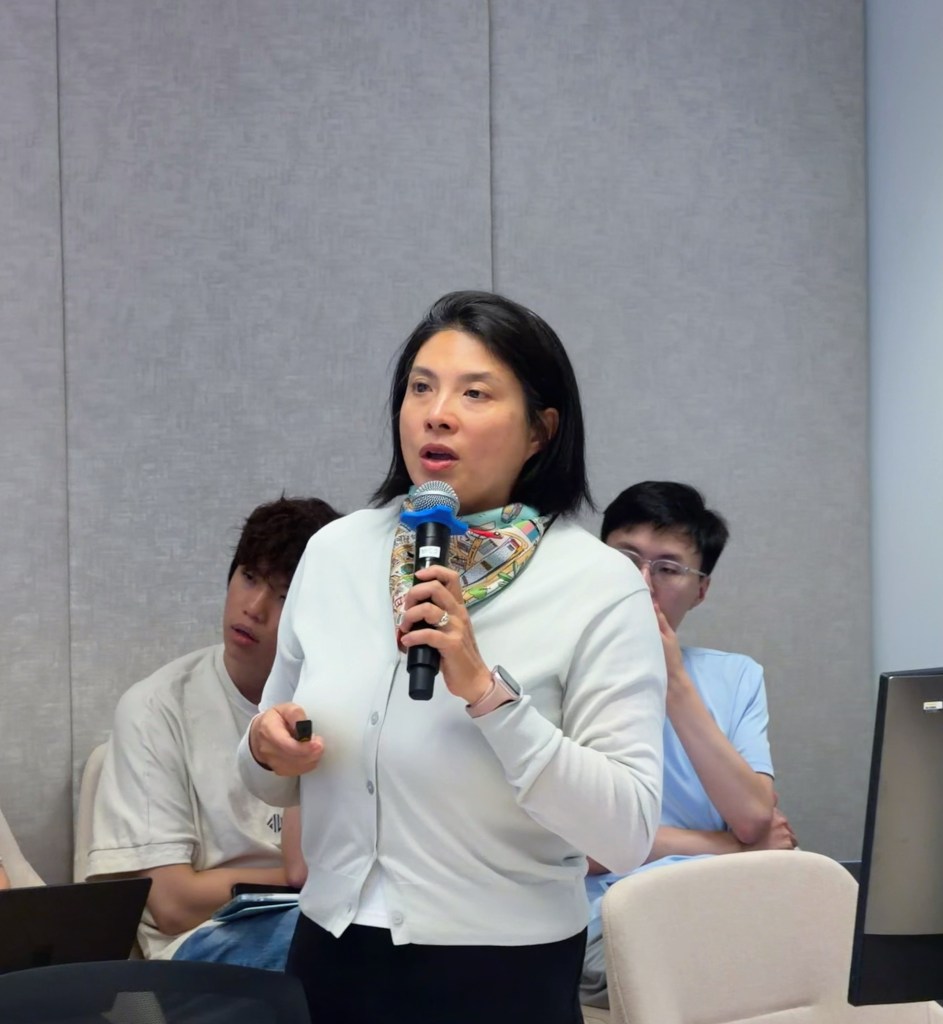
Professor Emilie Tran speaks on cultural mediation and public diplomacy
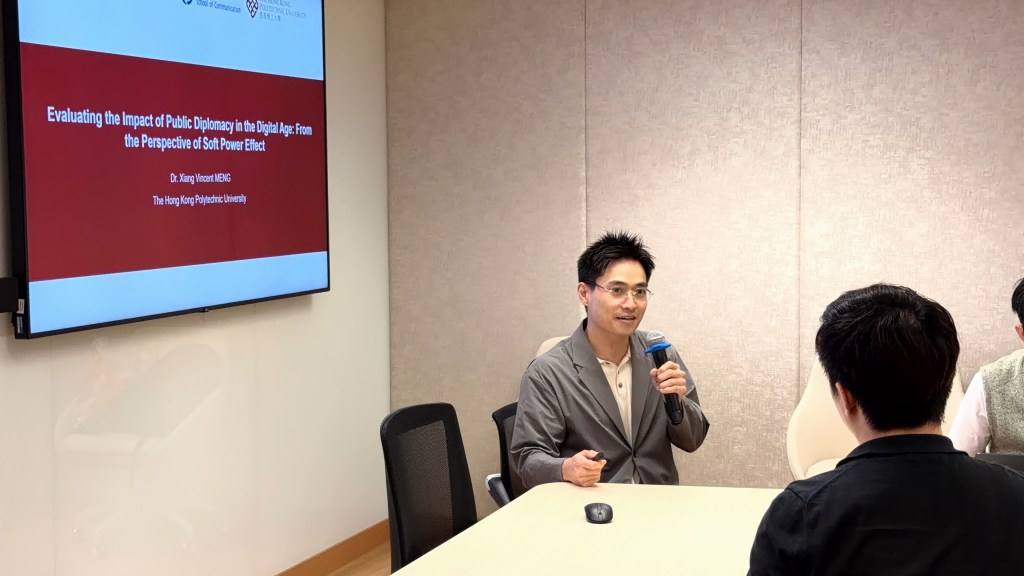
Dr Xiang Meng of The Hong Kong Polytechnic University discussed how the effects of public diplomacy can be assessed through the lens of soft power. He examined policy-based approaches to measuring influence, including how public diplomacy may increase the visibility and relevance of policies among foreign publics and relate to their attitudes and policy preferences. His presentation also considered the use of panel surveys, experiments and computational approaches in evaluating these effects.
Dr Xiang Meng discusses evaluating public diplomacy through soft power.
Professor Sheng Zou’s presentation was entitled, “Centering the popular and the vernacular in digital public diplomacy: Memeifying China in the platform era.” He discussed the role of memetic culture in digital public diplomacy. Using examples such as “City 不 City” “Chinamaxxing” the “TikTok refugee” “China Haul” etc., he discussed how users and influencers created narratives about China that circulate through platforms and were subsequently reframed by media and official actors. His presentation highlighted the tensions between participatory creativity, platform visibility, and attempts to shape national narratives.
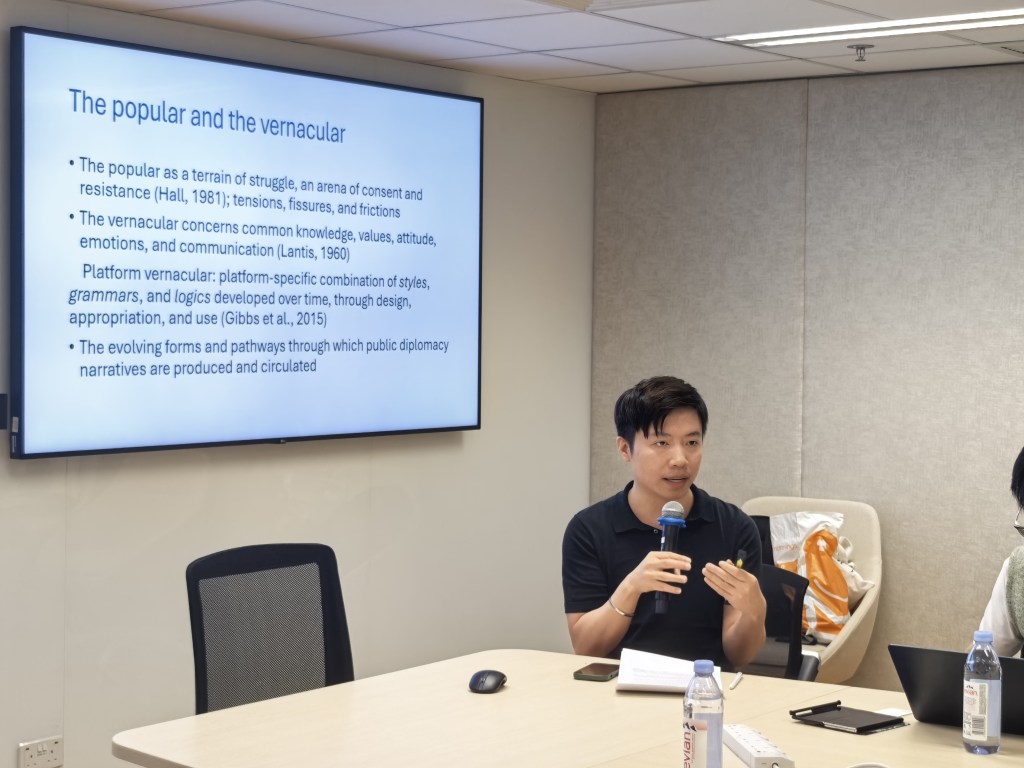
Professor Sheng Zou examines popular and vernacular culture in digital public diplomacy
The presentations offered complementary perspectives on how public diplomacy narratives are shaped and circulated, and how their reach, credibility and influence can be understood in a changing media environment.
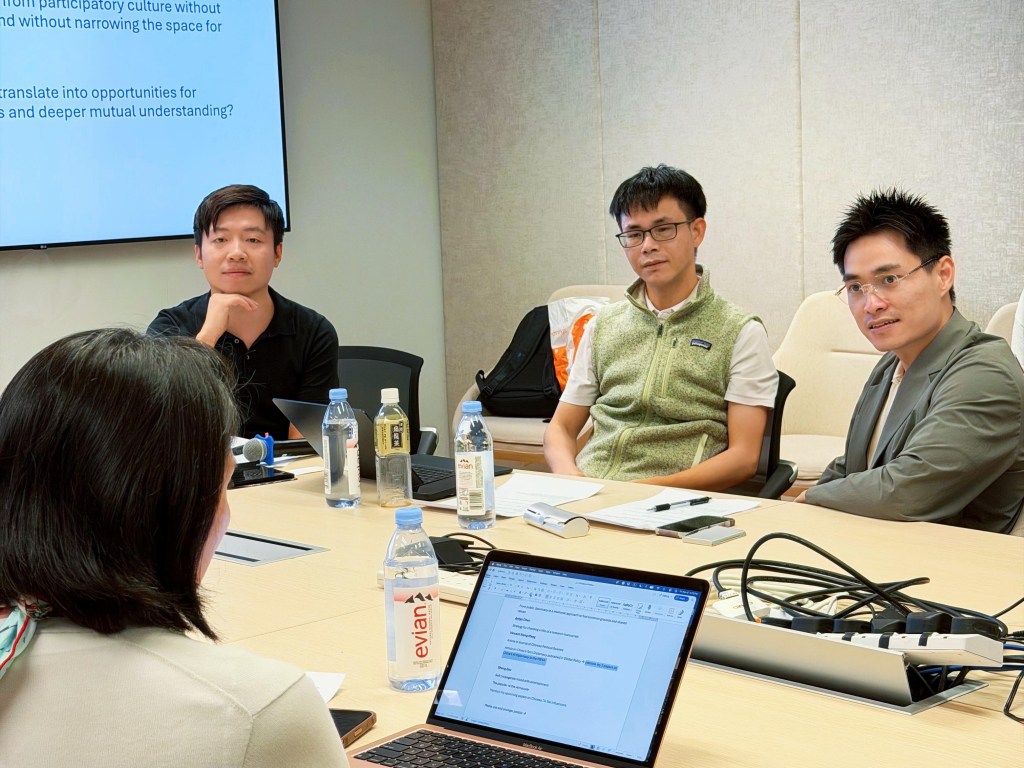
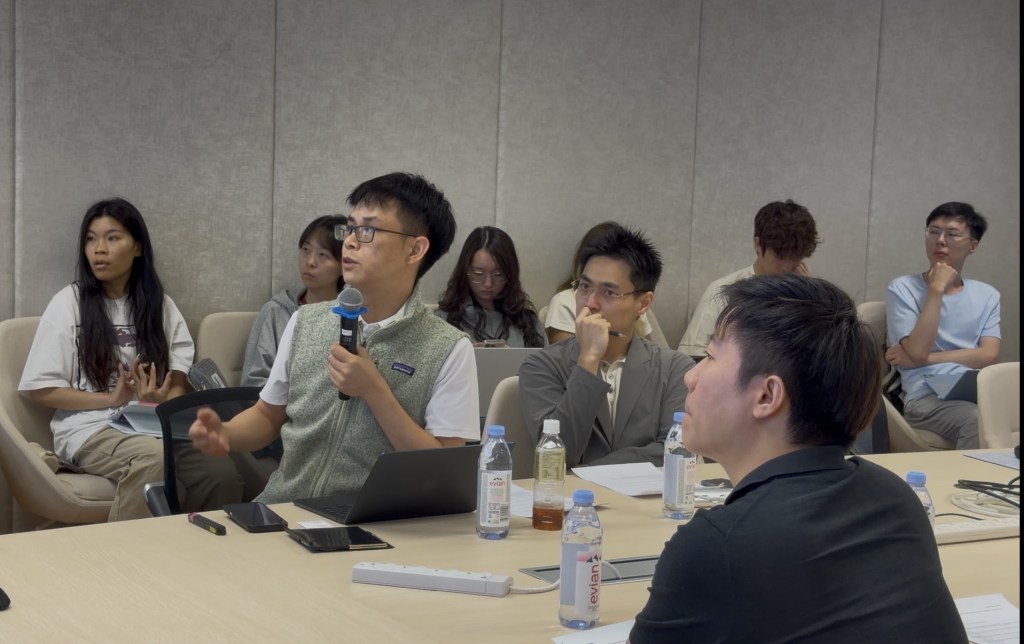
Participants during a discussion at the PubDiplo Colloquium
The colloquium was supported by the ANR/RGC Joint Research Scheme, which enables research teams in France and Hong Kong to explore a range of critical issues in public diplomacy.


Leave a Reply